
Is it actually possible to use artificial intelligence as your personal travel advisor? For anyone working in the travel industry, or for digital content creators relying on traditional organic traffic, the reality is shifting faster than most care to admit.
When my husband Eric and I planned our recent journey through France, we decided to bypass traditional travel blogs and forums. Instead, we handed the entire curation process over to large language models (LLMs) like Google’s Gemini and Perplexity. We wanted to see if AI could curate a highly specific, authentic travel experience based entirely on our unique personal preferences.
The results were stunning, occasionally flawed, and filled with massive implications for how local businesses must approach digital visibility. The AI suggested destinations we had never even heard of, completely transforming our itinerary. More importantly, it forced me to look at search engine optimization (SEO) through an entirely new lens: LLM Search Optimization.
How an AI Travel Agent Planned Our Trip Through France
As a marketing professional and content strategist, I am deeply focused on how search behavior is evolving. But experiencing this shift as a consumer in a foreign country brings a completely different level of clarity. Our AI tools didn’t just give us a list of generic tourist spots; they offered high-level expertise that traditionally required hours of manual research.
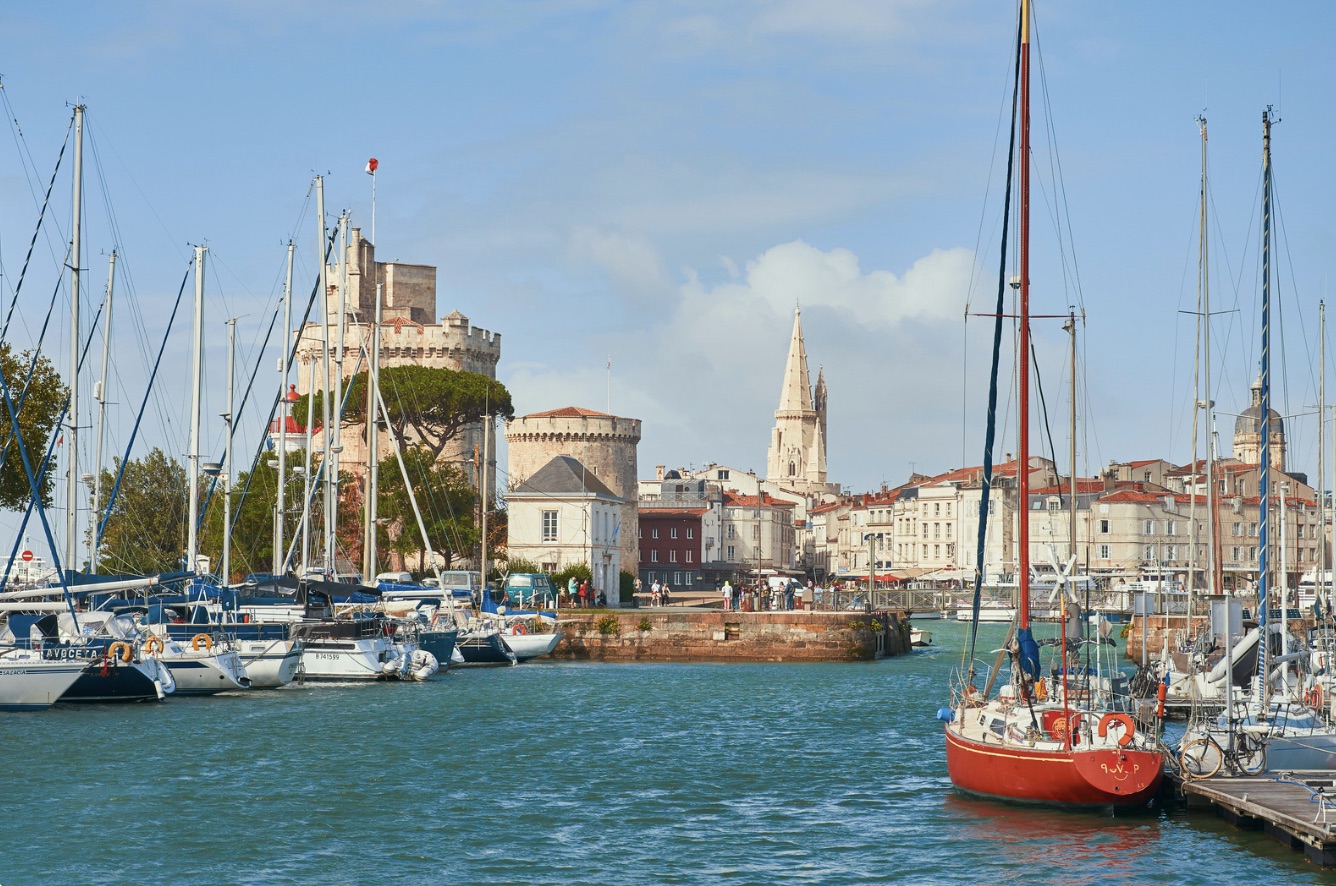
The fact that it suggested we visit La Rochelle—and other places we had never even heard of, let alone been to—was the first sign of how deeply these models can parse regional data.
Finding Local Authenticity in the Bordeaux Food Market
We always tend to scope out local food markets when we travel. It is a specific experience we deeply enjoy, and it is something we truly miss while living at home in the U.S.
Without AI, would we have been able to find the right market in Bordeaux to have the exact experience we wanted? Probably. Maybe we would have stumbled across it eventually. But traditional search engines would have thrown a wall of sponsored links, ad-heavy blogs, and review sites at us, forcing us to parse the data ourselves.
Instead, the nuanced way the AI described the market meant that we went there the very first morning of our first day in Bordeaux. We enjoyed it so much that we returned on our second and third days as well.
There was something about the market in Bordeaux that we fell in love with. It reminded us of the market we used to shop at when we lived in Girona in Cataluña, Spain. It was not a sterile tourist trap like La Boqueria or other markets in Barcelona.
Yes, Barcelona still has daily shoppers, but it has turned into such a massive tourist destination that it has lost its core authenticity. In Girona, we had a very local market. We went there a couple of times a week, including our Saturday morning shopping.
We often found ourselves at the little bar in the market having a small beer—a caña—and a little sandwich. It just became a tradition for us. We got to know the different vendors and stall owners, and some of them were even trying to teach me Catalan instead of Spanish. It became something we truly loved about living in Girona, and this Bordeaux market felt incredibly similar.
The biggest difference was that the Bordeaux market was bigger and more open-air, whereas the market in Girona was more closed in. The Bordeaux market also had many more options of places to eat or drink right within the market space.
There were tiny, artisanal coffee shops. There was a little wine and cheese bar. There was a dedicated place for crepes, a place that specialized in fresh mussels, and several bars that specialized in cold seafood platters serving local oysters and prawns.
It is always amazing to eat inside a market because you know with absolute certainty that the food is fresh. You know the seafood is coming from a stall just two rows over. We even saw the woman who runs the crepe stand walk over to one of the produce vendors, say, “Hey, I’m grabbing this banana,” and walk back to make a fresh banana crepe.
We simply loved the Bordeaux market. It quickly turned into a discussion between Eric and me of, “Do we want to move to Bordeaux solely to live near that market and have this experience every day?” Would we have found it without AI? Maybe, but discussing our preferences with AI definitely gave us a unique viewpoint on how to experience that market.
Surfacing the Unheard-Of: The Port Town of La Rochelle
The second place that Gemini and Perplexity recommended—which we completely fell in love with—was a town called La Rochelle. This is not a destination I had ever heard of before.
Interestingly enough, we asked tons of friends whom we know travel a lot in France, people who are actually from France, and even professional French chefs. None of them had ever traveled there before.
Because of that, we were a little nervous about what we had gotten ourselves into. This was particularly true because we do not speak French. Going to a regional town that does not necessarily get a massive wave of international tourism made us wonder how we would survive with our lack of the language.
We arrived on a Sunday afternoon after taking the train from Bordeaux, and I fell in love with it instantly. Part of it might be because we live in Colorado and we don’t have daily access to open water or fresh coastal seafood, but it was an adorable little port town.
The architecture was absolutely beautiful, and everyone was out on a Sunday just enjoying the day. There were tons of bars and cafes, and people were just sitting outside eating and drinking in the open air.
The central market was closed the day we arrived, or was just closing as we were walking around, so we didn’t really get to experience the market itself. But surrounding the market square were bars and cafes, and there was such an incredible buzz about the place. It was truly an adorable, vibrant large town or small city.
Within hours of exploring, Eric and I were literally googling the cost of local rentals and the cost of apartments to buy in La Rochelle. And we never would have found it as a travel destination if it weren’t for Gemini and Perplexity making the recommendation and validating that it was a place we would deeply enjoy.
The Nuance of Travel Curation: Nantes and Clisson
The third area we explored during this trip to France was a day trip recommended to us from the city of Nantes. To be perfectly honest, we didn’t enjoy Nantes quite as much as Bordeaux and La Rochelle. It doesn’t have the same sort of historic character or feel, and the city in general just felt very, very young.
We would try to find a place to go for an evening drink, and the outdoor seating would be entirely filled with 200 people under the age of 25. So from that standpoint, Nantes might not have been the best suggestion for us.
Even though it wasn’t a perfect match, we still ate very well while we were there and enjoyed walking around the city. We also found an amazing little wine bar that specialized in the local Muscadet grape that we really enjoyed.
But for one of our last days in France, we wanted to look for a quick day trip that we could get to within 20 or 30 minutes by boat or by train from Nantes. We ended up in Clisson, located just outside of Nantes within the local wine country.
AI categorized Clisson as a Tuscan-style village. We managed to get there just in time to see the local Friday market. I would not have known about this market other than the AI explicitly telling us that it’s a Friday morning market, and it just so happened to be a Friday that we were there.
Seeing that market was great. There is a beautiful river that runs right through the town, and just walking around, seeing the historic architecture, and soaking in the environment was wonderful. The AI then recommended a lovely place for lunch where we had an amazing four- or five-course meal right on the river. That was just a phenomenal experience.
How Are People Actually Searching Today?
Our journey through France proved a fundamental truth: AI is rapidly changing how people search, decide, and buy.
In traditional search, the burden of synthesis falls entirely on you, the user. You type a keyword, open ten different browser tabs, read through ad-laden travel blogs, filter through potentially manipulated review platforms, and cross-reference maps.
AI search engines eliminate this friction entirely. Instead of providing a list of blue links, Gemini and Perplexity scan thousands of data points across the web, synthesize the information, and present a cohesive, personalized narrative.
Users are no longer typing fragmented keywords like “best markets Bordeaux.” They are inputting complex, multi-layered, conversational prompts. They are asking the AI to match an vibe, a personal history, and a distinct standard of quality.
When a consumer searches this way, the AI looks for conceptual alignment, contextual relevance, and deeply trusted sentiment across the entire web. It evaluates digital content not as a collection of isolated keywords, but as an interconnected web of authoritative brand narratives.
Why Are Most Businesses Invisible to AI?
While the AI performed exceptionally well at high-level curation during our trip, it faltered slightly on the hyper-local execution.
When we were in Clisson, we were looking to try to visit a winery or do a local wine tasting. This is where the AI’s information was a little bit outdated. It explicitly told us that we could do wine tastings at the local tourism board—which we couldn’t do. It also recommended a winery that we could visit entirely by foot. We didn’t plan far enough ahead to be able to confirm whether we could actually do a wine tasting there, so from that standpoint, it didn’t get everything 100% correct.
Again, the devil is always in the details. But overall, we would not have necessarily found that town at all if we didn’t use AI to help plan this trip.
This minor error reveals the exact point of vulnerability for local business owners. If an AI model is scanning your business data and encounters conflicting, outdated, or sparse information, one of two things happens:
- The AI provides inaccurate information to the consumer, damaging the customer experience.
- The AI experiences low confidence in your data and completely omits your business from its recommendations.
Most businesses are completely invisible to AI search right now because their digital footprints are entirely unoptimized for LLM scraping. They rely on old-school SEO tactics—keyword stuffing and basic meta tags—while completely ignoring how neural networks actually process business entities.
What Does This Mean for Local Businesses?
Visibility in AI search is the definitive future competitive advantage for businesses. As conversational platforms become the primary interfaces for user discovery, the brands that fail to adapt will see their organic pipeline dry up entirely.
Who Is Losing Visibility?
- The Overly Polished and Generic: AI models are trained to parse high-quality, substantive information. Businesses that rely on low-value, repetitive marketing copy or cheesy, keyword-stuffed descriptions are routinely filtered out by LLMs that prioritize clinical authority and authentic user sentiment.
- The Digitally Inconsistent: If your operational hours, service offerings, booking requirements, or location details are inconsistent across your website, social profiles, and third-party directories, LLMs will deem your business unreliable and skip you to avoid a hallucination.
- The Unmentioned: If real human beings aren’t talking about your brand in specific, descriptive terms on forums, review platforms, and independent articles, the AI has no qualitative data to pull from.
Who Is Winning Visibility?
- The Authentically Authoritative: Businesses that establish clear, accurate, and deeply detailed data about what they do, who they serve, and how they operate.
- The Contextually Rich: Brands that understand their specific niche and ensure their digital content directly answers the highly conversational, hyper-specific queries modern consumers feed into LLMs.
Key Takeaways for Building AI Visibility
If you want your business to be recommended by an AI travel agent, an AI business consultant, or an AI shopping assistant, you must fundamentally shift your content strategy.
- Prioritize Entity Accuracy Over Cleverness: Ensure every foundational detail about your business—services, target markets, operational nuances—is explicitly stated across the web. Avoid abstract or overly creative phrasing that AI systems might misinterpret.
- Build a Rich Footprint of Organic Sentiment: LLMs understand nuance and context. They look for detailed human reviews that explain why an experience was exceptional, not just five-star ratings. Encourage your customers to write detailed, descriptive feedback online.
- Optimize for Generative Engine Optimization (GEO): Structure your website content to explicitly answer consumer questions. Use direct, clear language that allows an LLM to easily parse your value proposition and match it to a user’s conversational prompt.
The New Reality of Local Visibility
Our journey through the markets of Bordeaux and the historic streets of La Rochelle proved that AI curation is no longer a futuristic theory—it is a live consumer behavior. AI has the power to drive foot traffic directly to a local market stall or guide tourists to a completely overlooked coastal town.
As an entrepreneur and business owner, you cannot afford to let your digital footprint stagnate. The businesses that optimize for both human readers and AI models today are the ones that will dominate the marketplaces of tomorrow. If you aren’t actively building AI visibility, your business is quietly becoming invisible.
FAQ: Understanding LLM Optimization
AI models rely on the data available to them via web scraping and API integrations. If a local business changes its hours, moving policies, or tasting availability, but fails to update that information uniformly across the web, the AI will pull outdated cached data. This leads to inaccuracies that can frustrate users.
Generative Engine Optimization (GEO) is the practice of optimizing your digital presence so that large language models easily discover, understand, and recommend your business in conversational search results. It focuses on entity clarity, semantic context, authority, and natural user sentiment rather than simple keyword matching.
To improve visibility, a business must publish structured, clear content that explicitly defines its services, location, and target audience. Additionally, generating authentic mentions and descriptive reviews on independent platforms provides the qualitative data LLMs need to validate recommendations.